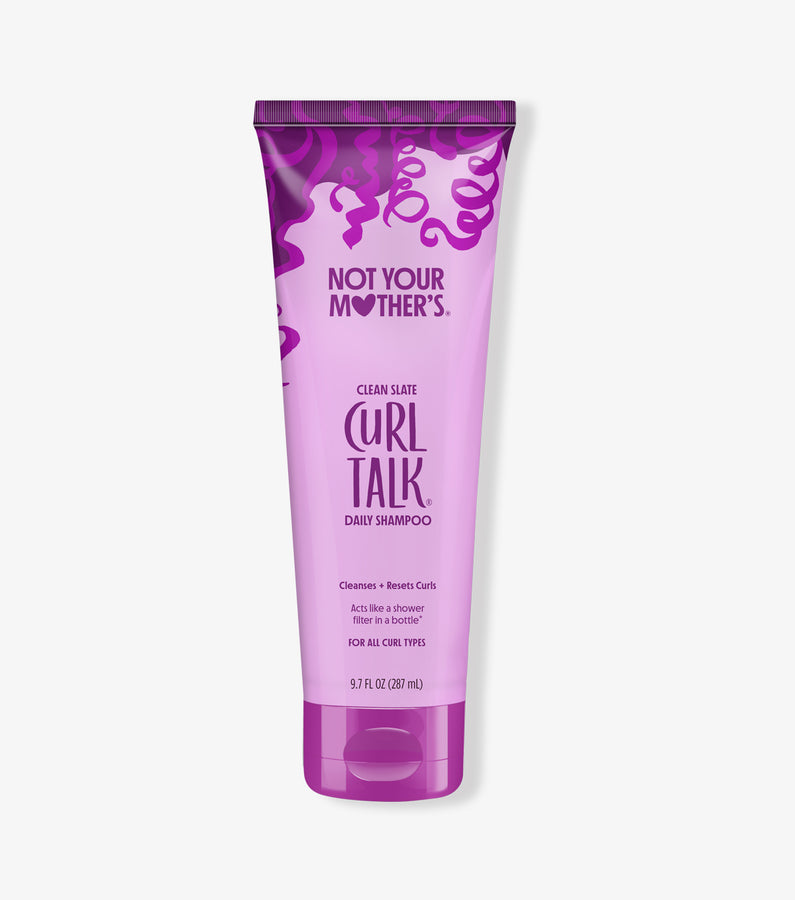
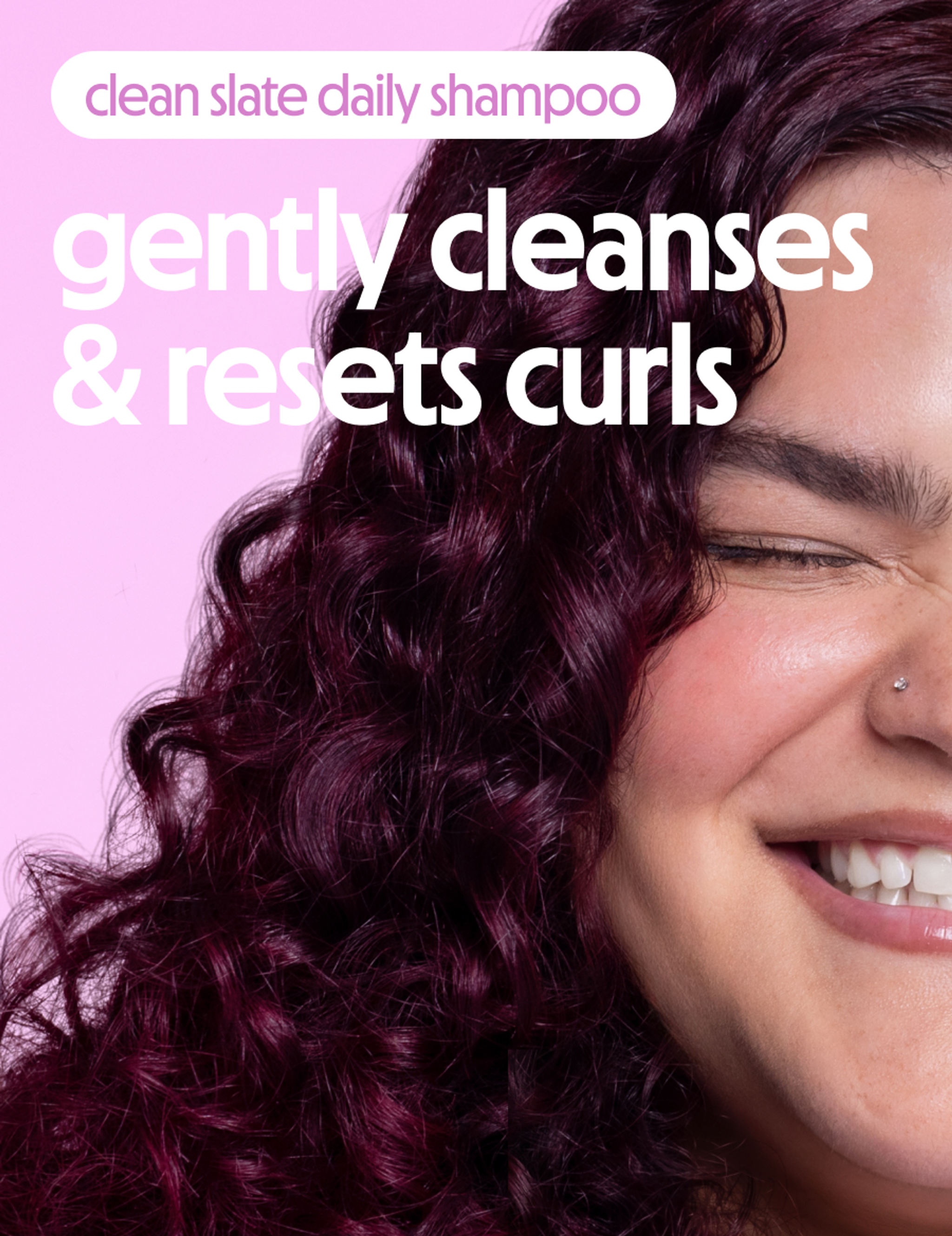
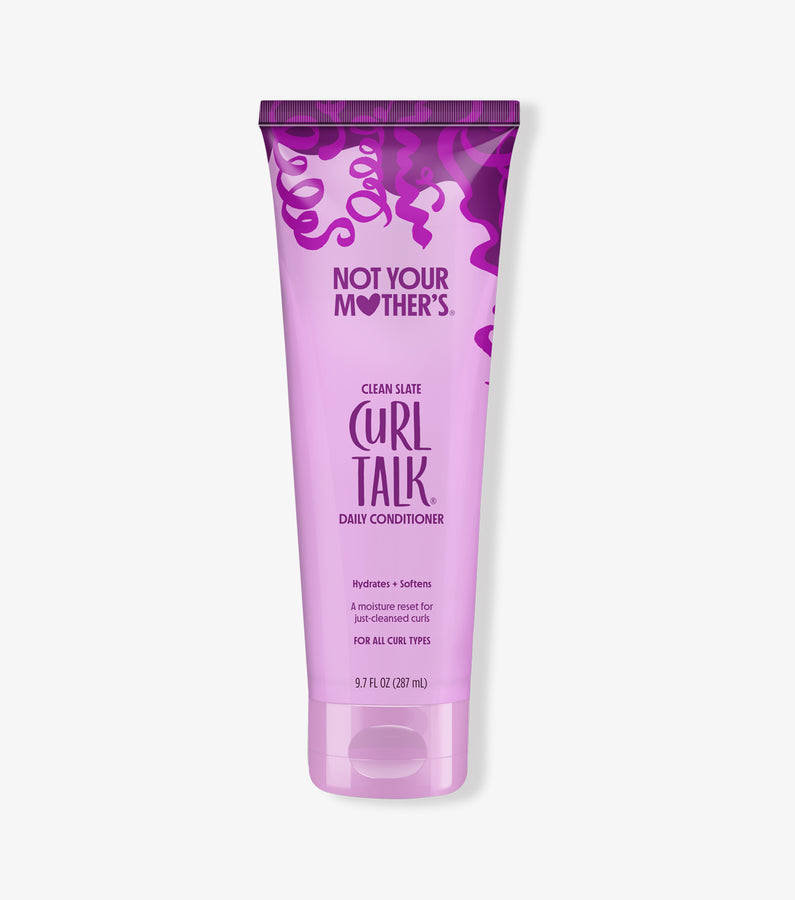
If your curls feel coated, dull, heavy, or harder to style than usual, buildup may be getting between you and your best curl day. But that does not automatically mean you need the deepest cleanse possible. A gentle buildup remover, like Not Your Mother’s Curl Talk Clean Slate Daily Shampoo, can wash away product residue, hard water buildup, and impurities for regular use without stripping curls. A clarifying shampoo is better saved for an occasional deeper reset.
Quick answer: which one does your curl routine need?
For everyday styling residue, hard water minerals, or curls that feel weighed down, start with a gentle shampoo for curls designed to remove buildup without taking away more moisture than necessary. Curl Talk Clean Slate Daily Shampoo is sulfate surfactant-free and silicone-free and gently resets all curl types without stripping.
A true clarifying shampoo has a different job: deeper cleansing when regular washing is not cutting through heavier residue. A practical starting point is every 2 to 4 weeks, then adjust based on product use, swimming, and the water in your home.
Because curly and coily hair can be dryness-prone, deep cleaning every wash day may leave it drier or frizzier.
What is product and mineral buildup, and why do curls show it fastest?
Buildup is residue that collects on hair and scalp over time. Styling creams, gels, oils, silicones, excess sebum, and minerals in your water can all contribute.
Hard water contains higher concentrations of dissolved minerals, especially calcium and magnesium. The U.S. Geological Survey classifies water as hard at 121 to 180 mg/L as calcium carbonate and very hard above 180 mg/L. Research has found that hard-water exposure can leave higher mineral deposits on the hair shaft.
For curls, buildup can become especially noticeable because many curl routines involve layered moisturizing and styling products. As residue accumulates, curls may lose bounce, shine, or definition and products may stop performing normally. Your buildup rate depends on your products, wash frequency, hair properties, and water, not curl pattern alone.
Signs it is buildup, not dryness
Common buildup clues include hair that feels coated or waxy after washing, products that sit on top of strands, curls that suddenly look dull or lose definition, and roots that feel heavy sooner than expected.
Scalp itching or flaking can happen alongside excess oil or product accumulation, but it can also have other causes. If it persists, do not assume buildup is the only explanation.
How a true clarifying shampoo works
Think of clarifying shampoo as your periodic deep-clean button. Compared with regular shampoo, clarifying formulas are generally designed to remove more stubborn oil, styling residue, and deposits in one wash.
That can be useful after heavy product layering or swimming. The American Academy of Dermatology also notes that people who regularly use gels, oils, creams, or pomades may want to consider a clarifying shampoo.
Deeper cleansing can also remove more of the oils curly hair relies on for softness and manageability. That is why clarifying shampoo for curly hair usually makes more sense as an occasional reset than an every-wash default.
How a gentle daily buildup remover works
A gentle buildup remover sits between a basic cleanse and a full clarifying reset. Curl Talk Clean Slate Daily Shampoo is designed to wash away product buildup, common hard water minerals, and impurities while staying gentle enough for regular use.
Importantly, Clean Slate is not a “true” clarifying shampoo. It is a sulfate surfactant-free, silicone-free daily reset shampoo for all curl types.
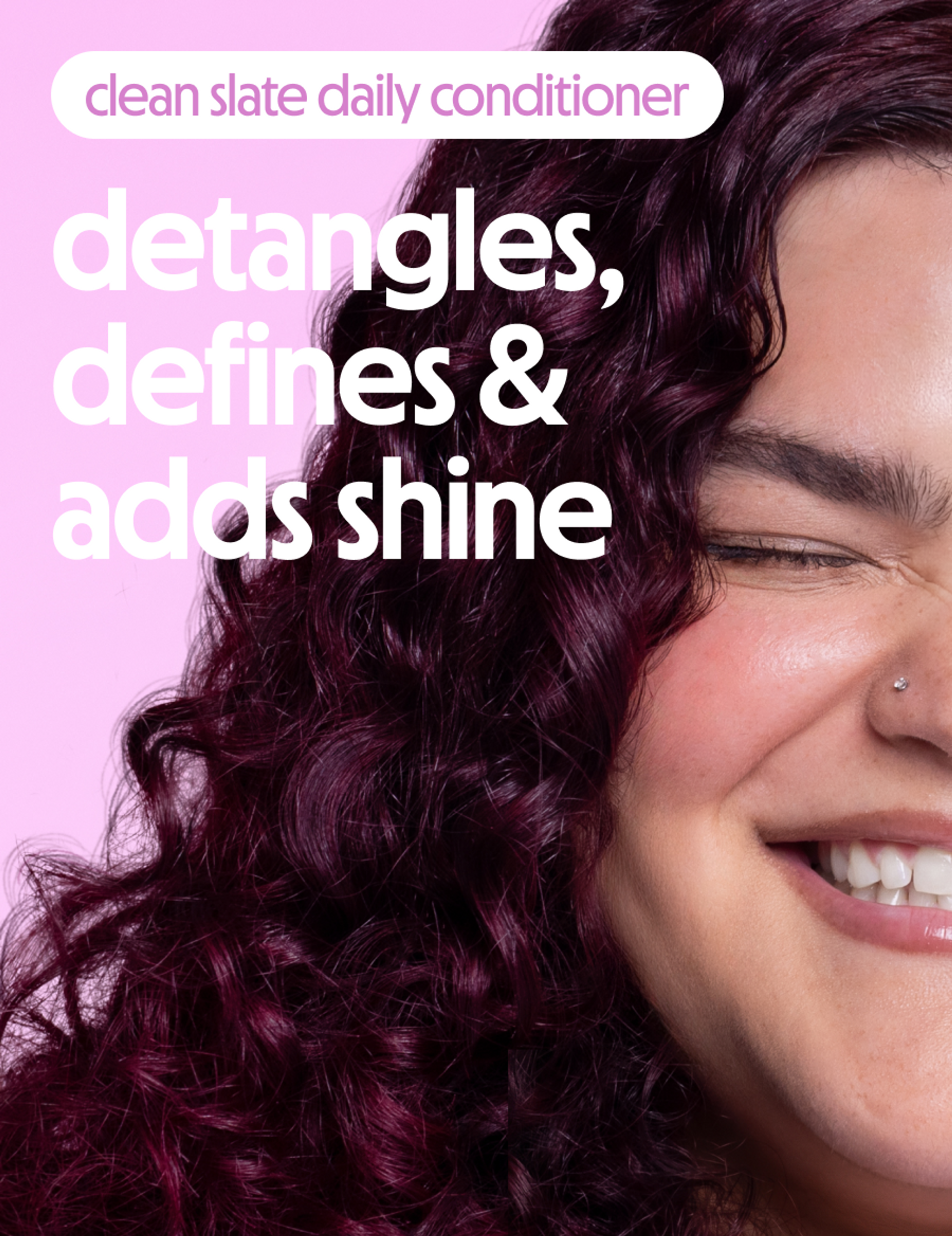
Follow with Curl Talk Clean Slate Daily Conditioner to help detangle, hydrate, soften, and bring bounce back to freshly cleansed curls.
How often to use each, based on your curl routine
Wondering how often to clarify curly hair? Use a gentle buildup-removing shampoo on regular wash days as needed. Reach for a true clarifying shampoo roughly every 2 to 4 weeks, or when heavy styling, swimming, or stubborn residue calls for a deeper reset.
If you use gels, creams, or oils frequently, you may need buildup removal more often. Fine, low-porosity, or dry curls may do better starting gentler.
How hard water changes the buildup equation
Hard water buildup on curly hair can make a routine feel “off” even when your products have not changed. Calcium and magnesium can deposit on the hair surface over repeated exposure, adding another layer to oils and stylers.
If you live in a hard-water area, regular gentle buildup removal may make sense even with a lighter styling routine. Clarify occasionally when residue feels more stubborn.
Some shower filters may help with water-quality issues, but not every filter softens hard water. If hardness is significant, a true water-softening system addresses calcium and magnesium more directly.
Choosing based on your water and product load
If your wash day involves layers of gels, creams, or oils, you may benefit from more frequent gentle resets. Hard water can also increase the need for buildup removal even when your styling routine is relatively simple.
Fine or low-porosity curls can become weighed down quickly, but that does not mean stronger cleansing is always the answer. Starting with a gentler buildup remover gives you a chance to reset without going straight to the deepest cleanse.
How to tell your buildup remover is working
Look for curls that feel lighter and softer, products that distribute normally again, less coated or waxy residue, and your usual definition returning within a wash or two.
Your hair should feel reset, not stripped. Clean should still feel soft, flexible, and ready for whatever your curl routine has planned next.

Clarifying shampoo vs. gentle buildup remover FAQs
What’s the difference between a clarifying shampoo and a gentle buildup remover?
A clarifying shampoo delivers a deeper clean for stubborn buildup and occasional resets. A gentle buildup remover like Curl Talk Clean Slate Daily Shampoo targets lighter residue, common hard water buildup, and impurities for regular use.
How often should curly hair be clarified?
A practical starting point is every 2 to 4 weeks, adjusted for product use, swimming, water hardness, and how your curls respond.
Can clarifying shampoo dry out curly hair?
It can. Deeper cleansing may remove more oil from dryness-prone curls, which is why clarifying is usually better as an occasional step.
Does hard water really cause buildup on curly hair?
Hard water contains calcium and magnesium, and studies have found greater mineral deposition on hair exposed to hard water.
How do I know if my curls have buildup versus just needing moisture?
Buildup often feels coated or waxy and can make products sit on the hair. Dry hair tends to feel rough or thirsty without that coated sensation.
What ingredients should I look for in a gentle buildup remover?
Look for a cleanser designed for frequent, balanced cleansing. Curl Talk Clean Slate Daily Shampoo is sulfate surfactant-free and silicone-free and formulated to gently remove buildup without stripping.
Is it safe to use a clarifying shampoo and a gentle daily shampoo in the same routine?
Yes. Use the gentler cleanser for regular wash days and bring in a true clarifying shampoo periodically when you need a deeper reset.
Key takeaways
Clarifying shampoo vs. regular shampoo is not about which one is “better.” It is about using the right level of cleansing for the buildup you have.
For routine product residue and hard water buildup on curly hair, Curl Talk Clean Slate Daily Shampoo offers a gentle reset without being a true clarifying shampoo. Save deeper clarifying for occasional moments when your regular cleanser needs backup, and adjust based on your products, water, and curl response.
Hard on buildup. Soft on your strands.