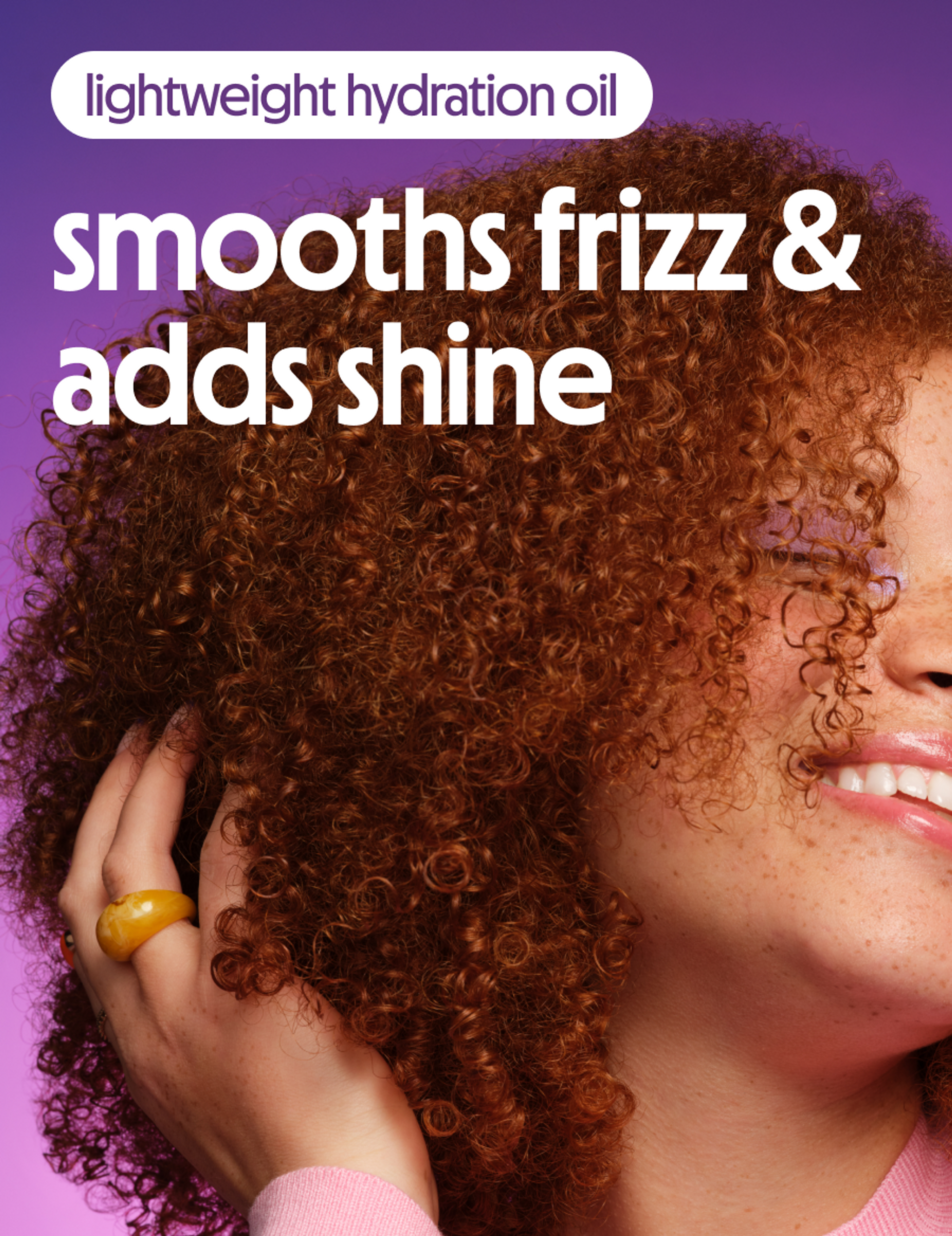
A lightweight hair oil adds shine and tames frizz on curls without flattening them when you use a small amount, apply it to your mid-lengths and ends instead of your roots, and choose a thinner, non-greasy formula. That’s it! The rest is knowing why it works and how to dial it in for your hair.
If oil has ever left your curls limp, stringy, or greasy, you’re not alone, and you don’t have to give it up. Below you’ll learn why some oils weigh curls down, what “lightweight” actually means, how much to use, when to apply it in your routine, and how to adjust for your curl type and porosity.
Why some hair oils weigh curls down
Heavy oils, too much product, and applying at the roots are the three most common reasons curls go flat or greasy. Oil itself usually isn’t the problem. The amount and the placement are.
Here’s why placement matters. Curly and coily strands bend and twist, so the natural oil your scalp makes (sebum) often has a harder time traveling all the way down the strand. That’s one reason curls tend to feel drier toward the ends while the roots stay comfortable. Your roots and ends need different amounts of help, and a little oil goes a long way at the ends.
Hair type plays a role too. Fine curls and low porosity curls (hair that tends to let product sit on the surface instead of soaking in) often show buildup and weight faster than thick or high porosity curls. If that sounds like you, the answer isn’t to skip oil. It’s to use less of it and choose a lighter one.

What makes a hair oil lightweight
A lightweight oil feels thin, absorbs quickly, and leaves a soft finish instead of a slick or coated one. Heavier oils tend to feel thicker and richer, and they can sit on the hair longer. Thinner oils tend to spread easily, so a few drops cover more hair and are less likely to leave that “I can feel it on my hair” film.
Jojoba oil and rice bran oil are two examples of oils commonly used in lighter formulas. Results vary from person to person, but many people with curls reach for them when they want shine without a heavy feel.
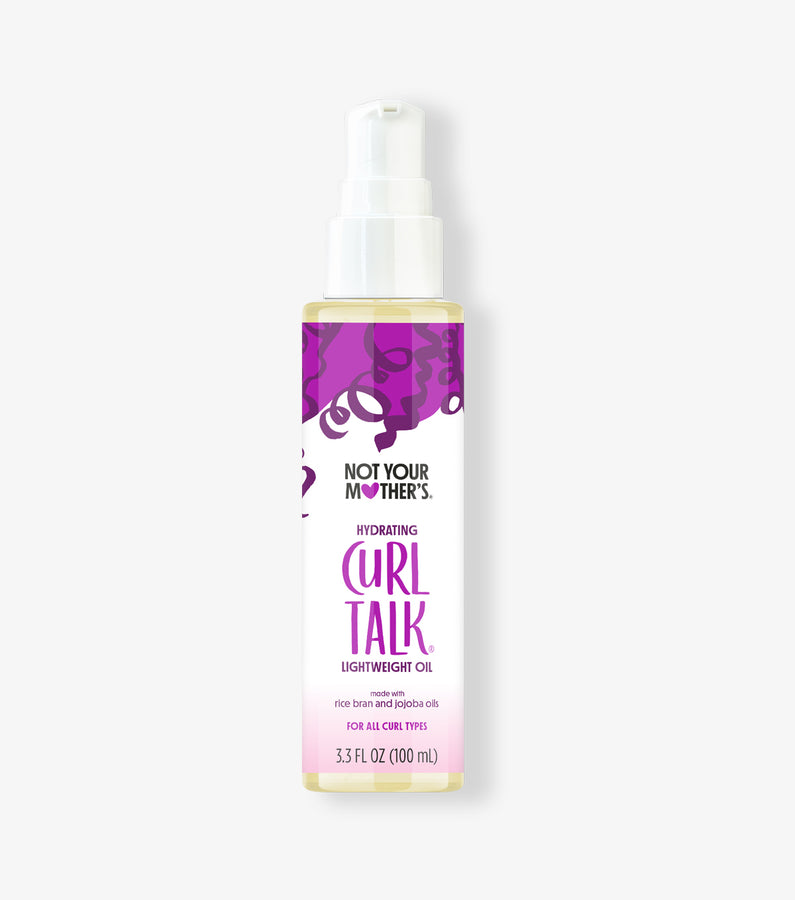
Not Your Mother’s Curl Talk Hydrating Lightweight Oil is one example. It’s made with rice bran and jojoba oils, it’s non-greasy, it hydrates dry curls, it helps tame frizz, and it adds shine. For a broader look at oils for curls, check out our Hair Oils for Curly Hair guide. This article is all about keeping things light.
How to use a lightweight oil on curly hair
Start small and build up only if you need to. Here’s the simple method:

1. Dispense a few drops into your palm and rub your hands together to warm the oil.
2. Starting at your mid-lengths, glide your hands down to your ends. Stay away from your roots.
3. Smooth lightly over the surface of your curls to catch frizz.
4. Scrunch or glaze, don’t rake. Press and scrunch upward, or glaze your palms over the curl clumps so they stay together instead of breaking apart.
5. Still dry or frizzy? Add one more drop at a time. You can always add more, but it’s harder to take it back out.
On wet hair vs dry hair
Both work. They just do different jobs. On damp hair, oil can help seal in moisture after your leave-in and styler. On dry hair, it can help break a gel cast (that crunchy shell gel leaves behind) and add shine. Try both for a couple of wash days and see which gives your curls better definition.
Where oil fits in a curl routine
Oil usually goes after your leave-in conditioner and your styling cream or gel, or at the very end as a finishing step. It also works on second or third day hair: a drop or two on frizzy sections can help refresh curls between wash days.
How much oil to use for your curl type
Use less for fine or wavy hair and a little more for thick, coily, or high porosity hair. There’s no exact number that works for everyone, so start with the smallest amount and build up over a few wash days.
How do you know you’ve used too much? Watch for these signs:
• Your roots look flat.
• Your curls clump into strings.
• Your hair feels coated by day two.
If you spot any of them, cut back next time. Results also shift with curl type, porosity, density, and climate, so treat your first few tries as testing.

Common mistakes that make curls greasy or flat
Using too much at once. Fix: Start with a few drops and add one at a time.
Applying at the scalp or roots. Fix: Keep oil on your mid-lengths and ends, where curls tend to need it most.
Stacking several oily products in one routine. Fix: If your styler, leave-in, and oil are all rich, scale back one of them, usually the oil.
Skipping a periodic reset. Fix: When your curls start to feel coated or heavy, it may be time to clear out buildup. Our clarifying shampoo vs. gentle buildup remover guide breaks down what curly hair needs.
Lightweight oil vs other shine products
Shine sprays and leave-in serums can also add shine, and they feel different on the hair. A lightweight oil is often the better pick when your curls are dry at the ends and you want hydration, frizz control, and shine in one step. Sprays and serums may suit you better if you want an even lighter feel or a different finish. Trying both is the easiest way to find out which one your curls prefer.
Frequently Asked Questions
Will hair oil make my curls greasy?
Not if you use a small amount of a lightweight formula and keep it off your roots. Greasy curls usually come from using too much oil or applying it at the scalp.
Should I apply hair oil to wet or dry curls?
Both work for different goals. Damp hair: oil can help seal in moisture. Dry hair: oil can help break a gel cast and add shine. Test both and see which gives you more definition.
How many drops of oil should I use on curly hair?
Start small, with a few drops, and build up only if needed. Thicker or coily hair usually needs a little more than fine or wavy hair.
Does oil go before or after curl cream or gel?
Oil usually goes after your leave-in and styler, or at the very end as a finisher.
Is a lightweight oil good for low porosity curls?
Low porosity curls tend to feel like product is sitting on top of the hair, so a thinner oil in a very small amount is the safer choice. Results vary, so start with less than you think you need.
Can I use hair oil every day on curly hair?
A drop or two on frizzy sections for a daily refresh is common. Just watch for buildup, and clarify when your hair starts to feel coated.
Is jojoba oil good for curly hair?
Jojoba oil is commonly used in lighter formulas and often works well for people who want shine without a heavy feel. How it performs depends on your curl type, porosity, and how much you use.
Is hair oil good for wavy hair?
It can be, with a lighter hand. Wavy hair usually needs less oil than curly or coily hair, so start with a drop or two at the ends.
Key Takeaways
• Use a few drops, apply from mid-lengths to ends, and keep oil off your roots.
• Choose a thin, non-greasy formula, like Curl Talk Hydrating Lightweight Oil, made with rice bran and jojoba oils.
• Adjust your amount for your curl type and porosity: less for fine or wavy hair, a little more for thick, coily, or high porosity hair.
• Oil can go on damp or dry curls, after leave-in and styler or as a finisher.
• Clarify when buildup shows up.
The right amount is the one you find by testing over a few wash days. Shiny, soft, and still springy? That’s the goal.